Layering: dressing for the mountains
Three thin layers beat one thick jacket. How to stay dry while you climb and warm when you stop.
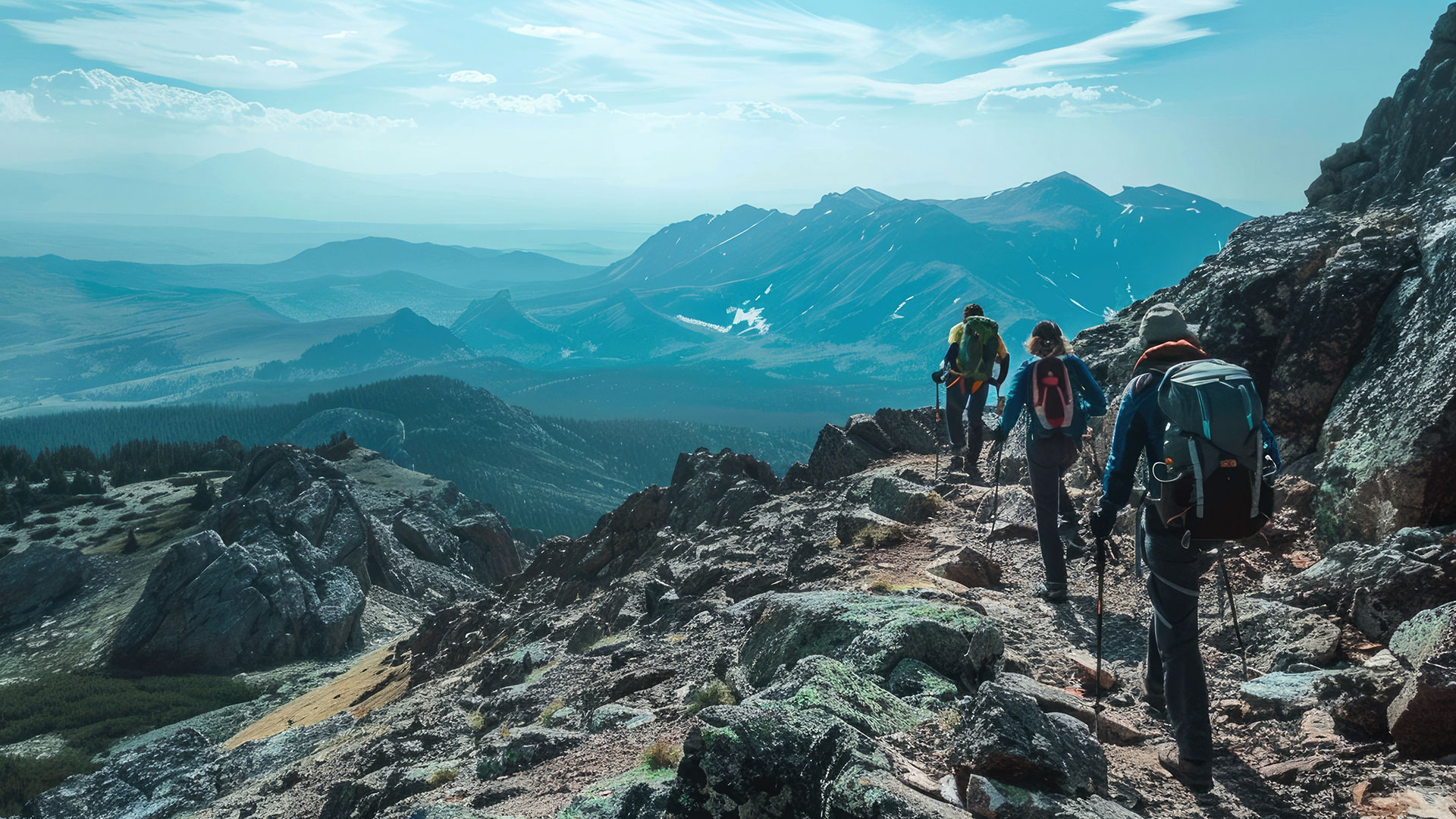
In the mountains you are hot on the way up, cold at the top and wet if the weather turns — sometimes all within an hour. Layers let you adjust instead of choosing one jacket for the whole day.
Base layer: move the sweat
Next to your skin, wear merino wool or a synthetic fabric that carries sweat away from your body. Avoid cotton: once it is wet it stays wet and cools you fast, even on a mild day.
Mid layer: hold the warmth
A fleece, a light synthetic jacket or a down jacket traps warm air. Fleece still insulates when damp; down is warmer for its weight but loses its warmth when wet.
Outer layer: block wind and rain
A waterproof, breathable jacket with a hood keeps out rain and wind. Carry it even when the forecast is good — wind on an exposed ridge can feel many degrees colder than in the valley.
How to use the layers
- check_circleStart a little cool. You will warm up within ten minutes of walking.
- check_circleTake a layer off before you start sweating hard, not after.
- check_circlePut a warm layer on as soon as you stop, before you feel cold.
- check_circleKeep one dry layer in a bag inside your pack for the evening or an emergency.
Most body heat is lost from uncovered skin. A hat and gloves weigh very little and make a big difference at breaks and on summits.
Legs and extremities
Quick-drying hiking trousers suit most days; add waterproof over-trousers for rain or wind. In cold months carry warm gloves, a hat and a buff for your neck.

Pathsie shows the forecast at your trip and route start, so you can pack the right layers.
verifiedSources
This guide is based on the advice of these organisations.
- British Mountaineering Council — A guide to hill walking clothing and layersopen_in_new
- Wilderness Scotland — Hiking in Scotland: what to wearopen_in_new
- The Mountaineers — The Ten Essentialsopen_in_new
- REI Expert Advice — Layering basicsopen_in_new
This guide is general information, not a substitute for training. Learn these skills on a course or with an experienced guide before relying on them.