Food and water on the trail
How much to drink, what to eat and how much to carry, from a day hike to several days with a stove.
Running low on energy or water turns a good day into a hard one, and makes you colder, slower and more likely to make mistakes. A little planning keeps you fuelled without carrying too much.
Water
- check_circleAs a starting point, plan on roughly half a litre per hour of walking, more in heat and on steep climbs.
- check_circleDrink when you are thirsty, little and often. Forcing down large amounts of plain water can also make you ill.
- check_circleOn long, hot days, add an electrolyte drink or salty snacks.
- check_circleKnow where you can refill, and treat water from nature before drinking it.
Food for a day hike
Eat a proper breakfast and then snack regularly rather than waiting for one big lunch. Good trail foods are easy to eat and pack a lot of energy: nuts, dried fruit, cheese, bread or wraps, bars, chocolate. Always carry more than you think you will eat.
Food for several days
- check_circleA long mountain day can burn far more energy than a normal day; plan generous portions.
- check_circleMany backpackers carry roughly 0.7 to 1 kg of dry food per person per day.
- check_circleChoose light, energy-dense foods: oats, couscous, pasta, rice, dried meals, nuts, oil and hard cheese.
- check_circlePlan a hot meal in the evening: it warms you and is good for morale.
- check_circlePack each day's food in its own bag so you know exactly what you have left.
Stove and fuel
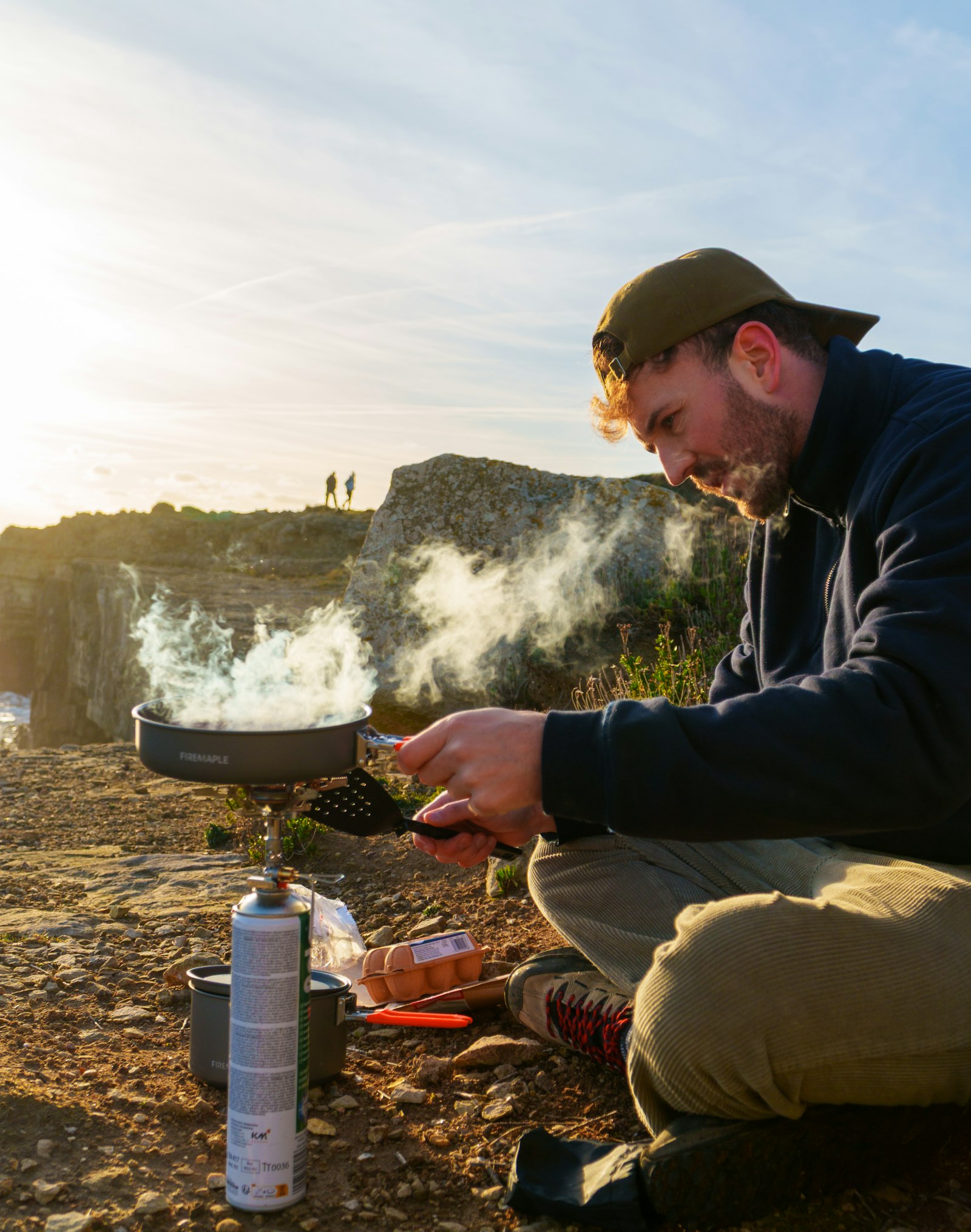
Test your stove at home and work out how much fuel you use for one meal and one hot drink. Cooking with a lid and out of the wind saves fuel. Never cook inside a tent.
Food safety and rubbish
- check_circleKeep fresh food for the first day; it spoils quickly in a warm pack.
- check_circleWash or sanitise your hands before eating.
- check_circleStore food away from animals as local rules say.
- check_circleCarry out all rubbish, including fruit peel and food scraps.
Snack on a schedule, for example a few bites every hour. Waiting until you feel weak means you are already running low.

Pathsie's meal planner plans every meal of a group trip day by day, with ingredients, calories and who cooks, next to the shared checklist.
verifiedSources
This guide is based on the advice of these organisations.
- U.S. National Park Service — Ten Essentialsopen_in_new
- CDC — Making water safe in an emergencyopen_in_new
- U.S. National Park Service — Backcountry campingopen_in_new
- Leave No Trace — The 7 Principlesopen_in_new
This guide is general information, not a substitute for training. Learn these skills on a course or with an experienced guide before relying on them.