Finding and treating water
Clear water can still make you ill. How to choose a source and how boiling, filters and tablets differ.
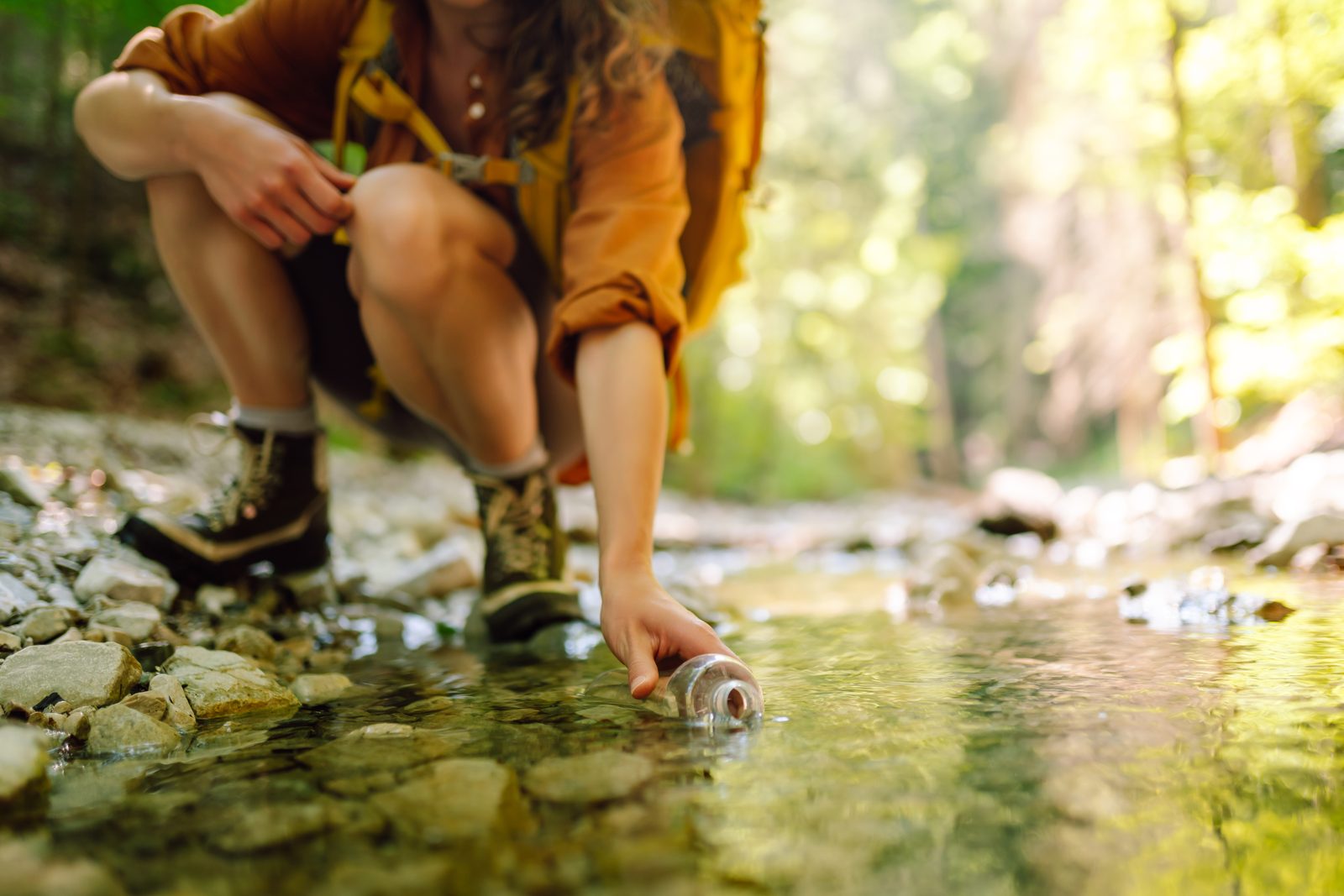
You can go a long time without food but not without water, especially in heat. Carry enough, know where you can refill, and treat what you drink from nature.
Choosing a source
- check_circleRunning water from a spring or stream is better than still water from a pond or puddle.
- check_circleCollect it upstream of paths, campsites and grazing animals.
- check_circleEven clear, cold mountain water can carry bacteria and parasites. Treat it anyway.
Ways to make it safe
- check_circleBoiling: the World Health Organization says a rolling boil is enough to kill bacteria, viruses and parasites. The CDC advises keeping it boiling for 1 minute, 3 minutes above about 2,000 metres.
- check_circleFilters: a good backcountry filter removes bacteria and parasites. Most do not remove viruses.
- check_circleChemical tablets: chlorine dioxide or chlorine tablets treat bacteria and viruses. Follow the waiting time on the pack; some parasites need longer, and cold water slows them down.
- check_circleUV pens: work on clear water only, following the device instructions.
If the water is cloudy, let it settle and pour it through a clean cloth before treating it. Filters clog less and chemicals work better.
Water that may be polluted with chemicals or fuel cannot be made safe by boiling or by most filters. Do not drink it.
Watch for dehydration
Thirst, a headache, tiredness and dark urine are early signs. Drink little and often rather than a lot at once, and drink more in heat, at altitude and when you sweat a lot.

Mark springs and water points as waypoints while you record a route in Pathsie, so you and your group can find them next time.
verifiedSources
This guide is based on the advice of these organisations.
- World Health Organization — Boil water (technical brief)open_in_new
- CDC — Making water safe in an emergencyopen_in_new
- Wilderness Medical Society — Clinical practice guidelines on water treatment (2024 update)open_in_new
- REI Expert Advice — How to treat water while backpackingopen_in_new
This guide is general information, not a substitute for training. Learn these skills on a course or with an experienced guide before relying on them.