How to choose hiking and trekking boots
Shoe or boot, soft or stiff sole, leather or synthetic: matching footwear to your trips, getting the fit right and knowing when to replace it.
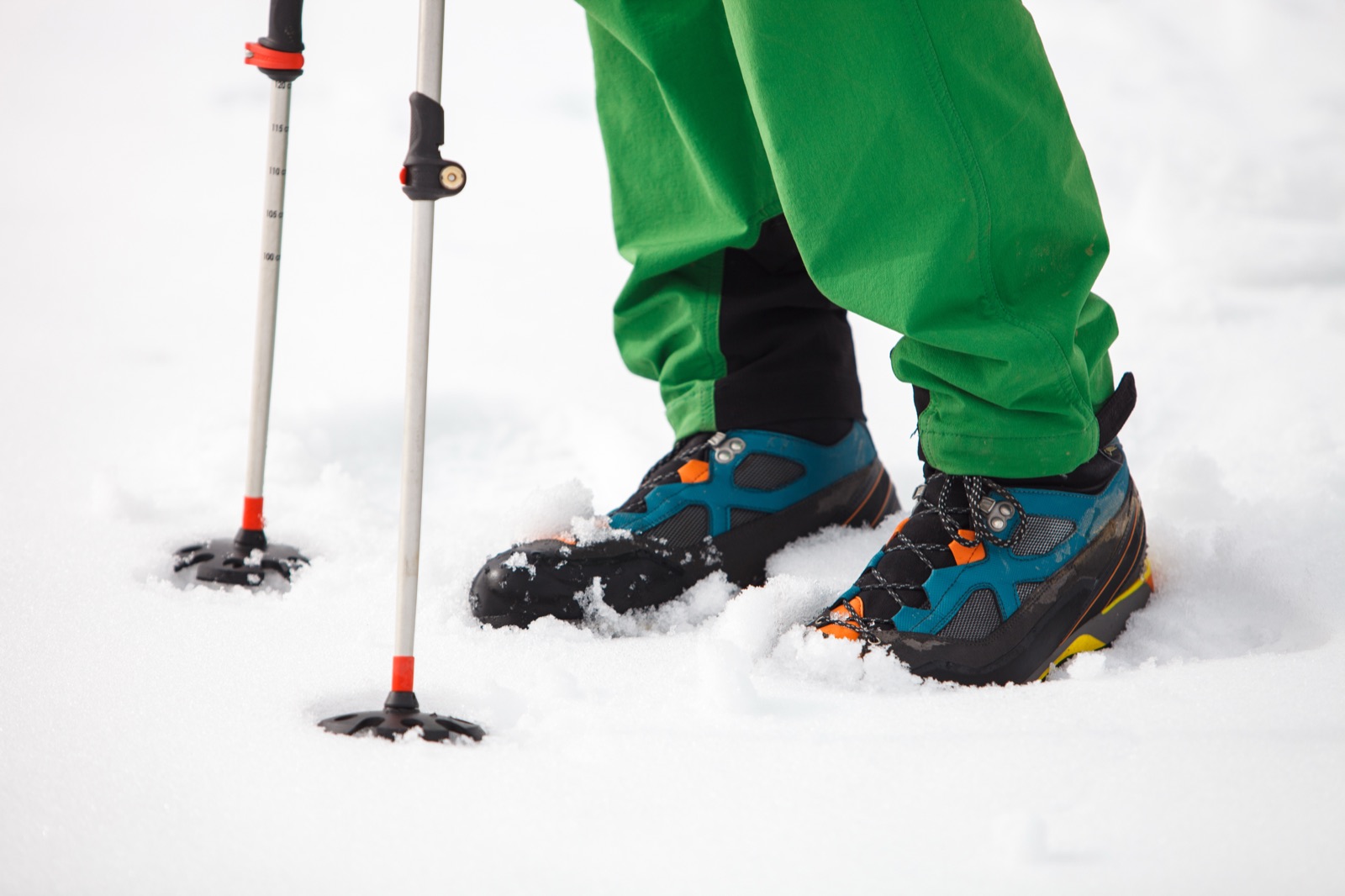
The right footwear depends on three things: the ground under your feet, the weight on your back and the shape of your feet. Think about the trips you do most often, not the one big expedition you might do one day.
Shoe, mid boot or full boot
- check_circleHiking shoes and trail runners: light and quick to dry. Good for maintained paths and day walks with a small pack.
- check_circleMid boots: reach over the ankle, keep grit out and give more support on stony, uneven ground.
- check_circleTrekking boots: higher, with a stiffer sole. Made for multi-day trips with a heavy pack and for rough, rocky ground.
How stiff the sole should be
Sole stiffness is the most important difference between models. A flexible sole is comfortable on easy trails; a stiffer one stops your foot tiring on rocks, edges and long descents with weight on your back. Many European makers sort their boots into categories:
- check_circleA: light, flexible shoes for easy walks.
- check_circleB: firmer trekking boots for mountain paths and multi-day trips.
- check_circleC: stiff mountain boots for alpine terrain and glacier approaches.
- check_circleD: very stiff boots for high mountains in snow and ice.
These categories are not an official standard; brands use them as a guide, and in-between grades such as A/B and B/C are common.
Boots and crampons
If you plan to walk on snow or ice, the boot has to suit the crampon. Boots are rated B0 to B3: B0 boots are too flexible for any crampon, B1 takes simple strap-on crampons, and stiffer B2 and B3 boots take hybrid or step-in bindings. A boot rated higher than the crampon is fine; the other way round is not. Check both makers' compatibility notes before buying.
Leather or synthetic upper
- check_circleLeather: hard-wearing and moulds to your foot over time. It stays water-resistant if you care for it, but it is heavier and takes longer to break in.
- check_circleSynthetic or mixed fabric: lighter, comfortable sooner and dries faster, though it usually wears out earlier.
A waterproof membrane keeps feet dry in wet grass, rain and shallow streams, but it is warmer, and once water gets in over the top it dries slowly. In hot, dry weather a breathable shoe without a membrane is often more comfortable.
Getting the fit right
- check_circleTry boots on late in the day, when your feet are at their largest, wearing the socks you walk in.
- check_circleYour toes need room to move and should not touch the front when you walk downhill.
- check_circleYour heel should stay in place; a heel that lifts with each step soon blisters.
- check_circleUse the ramp in the shop, or any slope, before you decide.
Most people have one foot slightly larger than the other. Choose the size for the larger one.
Breaking them in and caring for your feet
Wear new boots at home, then on short walks, before a long day. Wool or synthetic socks handle sweat better than cotton. Stop at the first hot spot and cover it with tape or a blister plaster; if a blister forms, try not to burst it and protect it with a soft dressing. For long descents, tighten the laces over the top of the foot so your toes do not hit the front.
When to replace them
- check_circleThe tread is worn smooth and you start slipping on wet rock.
- check_circleThe sole feels flat and your feet or knees ache sooner than they used to: the cushioning has compressed.
- check_circleWater gets in where it did not before, or the upper has split or come away from the sole.

Add your boots to My Gear in Pathsie and they go into every trip checklist automatically.
verifiedSources
This guide is based on the advice of these organisations.
- ZDFheute — Wanderschuhe richtig wählen (with the German Alpine Club)open_in_new
- outdoor-magazin.com — So finden Sie den richtigen Wanderschuhopen_in_new
- Sport Conrad — Hiking shoe and mountaineering boot categoriesopen_in_new
- Alpkit — B1 and B2 boots and crampon compatibilityopen_in_new
- NHS — Blistersopen_in_new
This guide is general information, not a substitute for training. Learn these skills on a course or with an experienced guide before relying on them.