Choosing and fitting a backpack
Pick the size for your trips, fit it to your back rather than your height, and let your hips carry the weight.
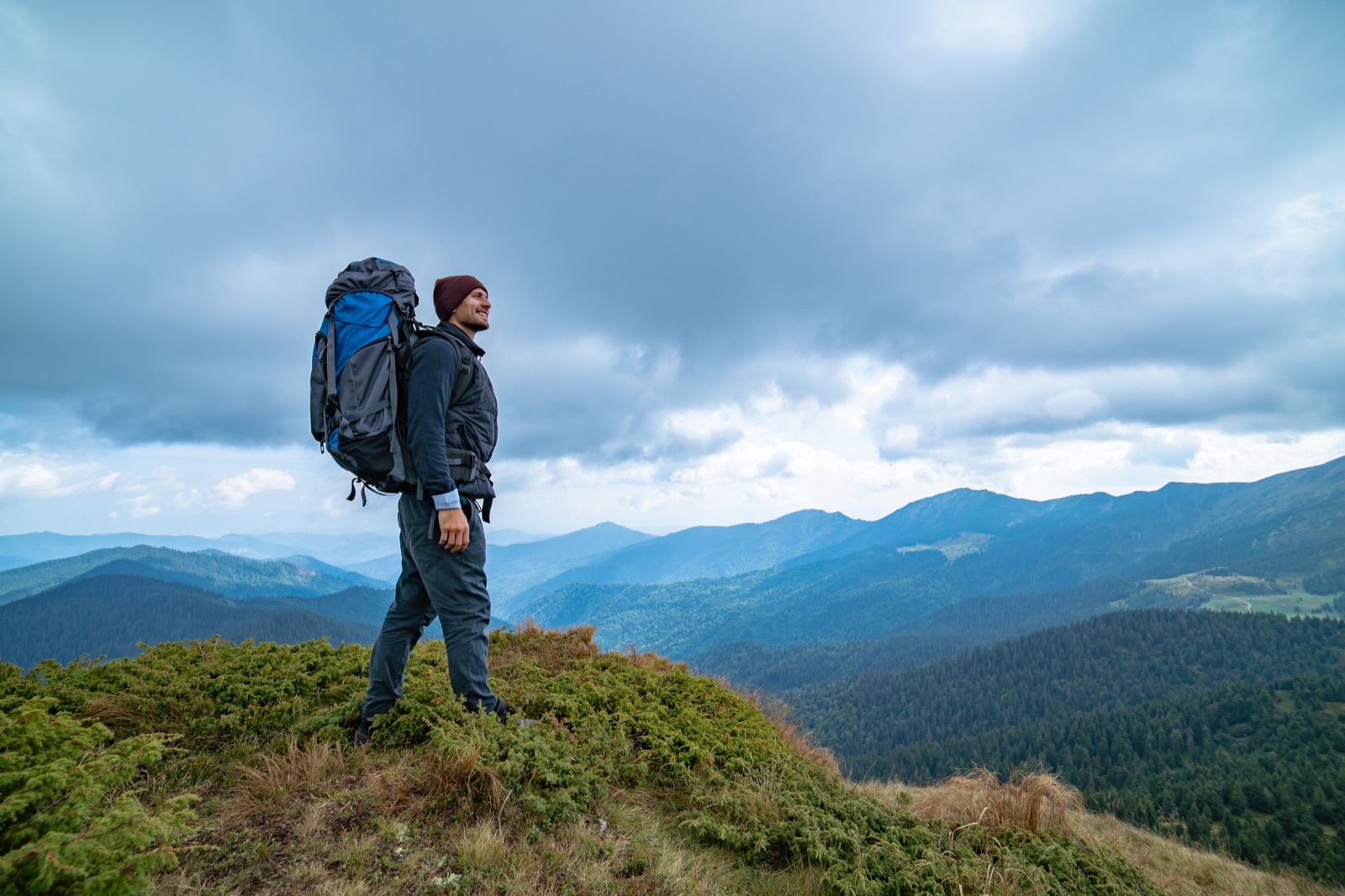
A well-fitted pack moves the load onto your hips, which are far better at carrying it than your shoulders. Get the fit right and a heavy day feels manageable; get it wrong and even a light load wears you down.
Size by trip
- check_circleDay walks: a small daypack holds water, food, a warm layer, a rain jacket and a first aid kit.
- check_circleNights out: packs for camping trips mostly range from about 45 to 80 litres. Light gear and short trips need the smaller end; longer trips, winter clothing or shared group kit need more.
Empty space tends to get filled. Lay out the gear you actually take and choose the size that fits it.
Your back length, not your height
Two people of the same height can need different pack sizes. What counts is the length of your back: from the prominent bone at the base of your neck when you tilt your head forward (the C7 vertebra) down to the level of the top of your hip bones. Get someone to measure it, then check each brand's size chart; a "medium" in one brand is not always a medium in another. Try packs on with realistic weight inside before deciding.
Adjust from the bottom up
- check_circleHip belt first: loosen all straps, lift the pack on and fasten the belt so its padding sits on top of your hip bones, not around your waist. Pull it tight.
- check_circleThen the shoulder straps: snug against your shoulders, but they should not lift the weight off your hips.
- check_circleThen the load lifters above your shoulders: a gentle pull brings the top of the pack in towards you.
- check_circleLast, the chest strap: fasten it across your chest to stop the shoulder straps sliding outwards.
Many people tighten the shoulder straps first. That hangs the load from the shoulders, and the hip belt never takes its share.
Straps loosen as you walk. Give the hip belt a tug at breaks, especially before a long climb or descent.
Packing it
- check_circleBottom: the sleeping bag and anything you only need at camp.
- check_circleMiddle, close to your back: the heaviest items, so the pack does not pull you backwards.
- check_circleTop, lid and pockets: what you reach for during the day, such as layers, rain jacket, snacks, map and first aid.
- check_circleWater bottle or hose where you can reach it without stopping.
Packs are rarely waterproof. Use a rain cover, or line the inside with a waterproof bag, to keep your sleeping bag and dry clothes dry.

Build your gear list once in Pathsie's My Gear and check it off for every trip.
verifiedSources
This guide is based on the advice of these organisations.
- Cotswold Outdoor — Rucksack fitting guideopen_in_new
- Macpac — How to fit your backpackopen_in_new
- REI Expert Advice — Backpacks: fit and torso sizeopen_in_new
This guide is general information, not a substitute for training. Learn these skills on a course or with an experienced guide before relying on them.